How to Invest in Crypto as a Complete Beginner
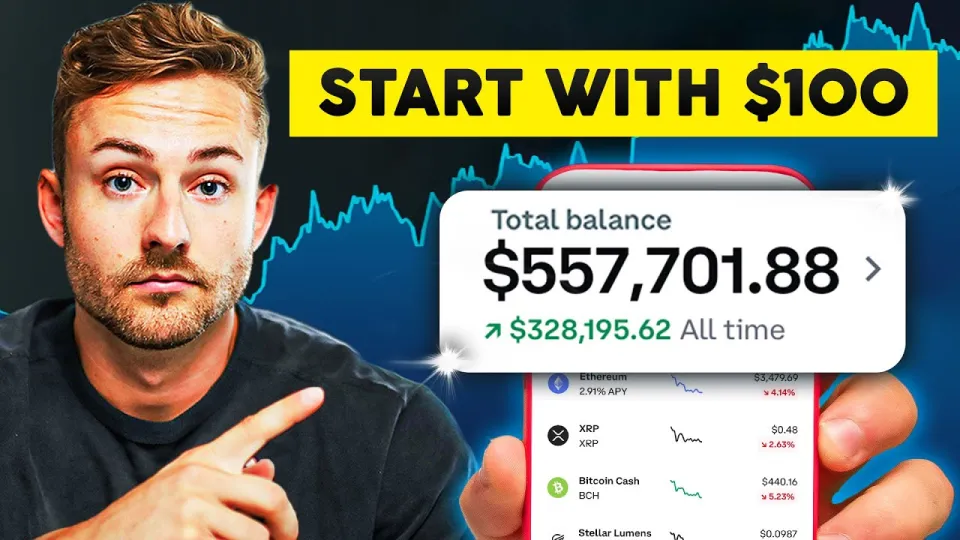
Video: How To Invest in Crypto as A COMPLETE Beginner [2025 GUIDE]
Want articles like this for your own video to promote it on YouTube and Google? Order them through the Telegram bot @sat_sit_bot. Articles with your video embedded are written and posted by the bot itself — on popular topical sites (no ads). Your first 50 articles are free.
· based on the channel Craig Percoco
Investing in crypto as a complete beginner means three things in order: learn what you are actually buying, decide how much money you can afford to lose, and only then open an account and place a first order. You do not need to predict the market to start — you need a written plan, a short list of assets you understand, and rules for taking profit. Craig Percoco, who has traded and invested for about seven years, built his beginner walkthrough around exactly that sequence, and you can follow the free training linked here: start learning trading for free.
What crypto actually is and why beginners are drawn to it
Crypto is a market of digital assets that settle on blockchains — public ledgers that record every transfer without a bank in the middle. Bitcoin, launched in 2009, is the oldest and largest; Ethereum added programmable smart contracts, which is why thousands of tokens and applications exist on top of it. For an investor, the practical consequence is that this is a young, volatile, 24/7 market with no closing bell and no circuit breakers, where prices can move 10% in a day on news alone.
The attraction is the same thing that makes it dangerous: an emerging asset class that is still small relative to equities or gold, so early participants can capture outsized moves. That potential is real, but it belongs to people who survive long enough to be there when it happens. Treat crypto as a high-risk satellite of a portfolio, not as a savings account.
The fundamentals to check before you buy any coin
Fundamentals are the questions you answer before looking at a price chart. A token can have a perfect chart and still be a bad investment if its supply is designed to crush holders.
- What does it do? Read the project's documentation and describe the use case in one sentence. If you cannot, skip it.
- Who is behind it? Named, public teams with a track record are easier to evaluate than anonymous ones.
- Tokenomics. Check total supply, circulating supply, inflation rate and vesting schedules — the dates when early investors and team members unlock tokens and can sell. Large unlocks are a common reason a price stalls.
- Real demand. Look at active users, fees paid and developer activity, not at follower counts.
- Liquidity. A coin with thin order books is hard to exit at a fair price, especially during a sell-off.
For a beginner, the simplest defensible approach is to start with the two largest assets, Bitcoin and Ethereum, and add smaller altcoins only after you can explain why they deserve a place.
Technicals and risk management that keep beginners alive
Technicals are how you choose an entry and an exit, and for a beginner they matter less than the risk rules around them. The basics worth learning are support and resistance (price levels where buyers and sellers previously stepped in), trend direction on higher timeframes, and volume confirmation — a breakout on weak volume often fails.
Risk management is the part that decides whether you stay in the game:
- Decide in advance what percentage of your capital one position may lose, and size the position from that number, not from how confident you feel.
- Place a stop loss at the moment you enter, not after the price has already moved against you.
- Avoid leverage and futures until you have a profitable spot record over many months; losses on leveraged products can exceed your initial deposit.
- Keep a reserve of stablecoins or cash so that a drawdown is an opportunity rather than a forced exit.
A useful discipline is to backtest a simple idea on historical data before risking money, then journal every trade: entry, exit, reason, result. Patterns in that journal will teach you more than any single indicator.
How investors actually make money in crypto
There are only a few honest ways to profit. The first is buying and holding assets you believe in over a multi-year horizon, accepting deep drawdowns along the way. The second is swing trading — buying support and selling resistance within a trend — which requires screen time and discipline. The third is systematic strategies with defined rules, which is where backtesting and journaling pay off.
What does not work is chasing small wins with small capital on every signal, then giving the gains back on one oversized bet. Beginners routinely describe months of false breakouts and pocket-change profits that never change their financial situation. The fix is fewer, better-planned trades with meaningful size relative to a strictly limited risk budget, plus a rule for taking profit: sell part of a position into strength instead of waiting for a perfect top.
How to buy and sell your first crypto
Buying crypto is the easy part. Pick a regulated exchange available in your country, complete identity verification, and fund the account with a bank transfer — card purchases are faster but usually carry higher fees. Start with a small test purchase, confirm that the asset arrives in your account, and only then scale up.
Practical steps:
- Compare fees on the exchange's spot market versus its instant-buy product; the difference compounds over years.
- Enable two-factor authentication and whitelist withdrawal addresses.
- Move long-term holdings to a hardware wallet if the amount is significant; exchange balances carry counterparty risk.
- Record every buy with date, price and amount so you can calculate taxes and real performance.
- When selling, use limit orders rather than market orders in thin markets to avoid slippage.
Common beginner doubts and mistakes
Skepticism is healthy. Many newcomers say openly that they do not fully understand crypto but want to learn — that is the right starting point, and it is why position sizing matters more than conviction. The most frequent mistakes are predictable: no written system, no patience, no discipline, no backtesting, no journal, poor psychology and poor risk management. Each one is fixable with process rather than talent.
Two other traps deserve a warning. First, unsolicited mentors and guaranteed-return offers in comments and private messages are almost always scams; legitimate education does not promise a fixed monthly income. Second, stories of turning a few thousand dollars into six figures in weeks are survivorship bias — for every one of them there are many accounts blown up by leverage. Verify claims, ask who is regulated, and never send funds to someone who approached you first.
Resources from the video
- Free trading training: https://bit.ly/3VHSOeT
- Crypto trading course and private team: https://bit.ly/3xhn47c
- Discord community access: https://bit.ly/3VmrO3r
- All resources: https://bit.ly/3zeM13u
- TradingView charting: https://bit.ly/3Xf9uvz
- Bybit exchange partner link: https://partner.bybit.com/b/fortraders
Conclusion
Investing in crypto as a beginner is a process, not a bet: understand the asset, size the risk, learn basic technicals, and keep records so experience compounds. The market's potential is genuine, but it rewards patience and discipline far more than enthusiasm. This breakdown was created by Craig Percoco, whose seven years of trading experience shaped the structure above. If you want a structured starting point, begin with the free trading training and treat every trade as a lesson you can measure.
Key takeaways
- Start with a written plan: how much capital you risk, which coins you buy and at what price you sell — before you place any order.
- Fundamentals come before charts: what the token does, who holds the supply, how it unlocks over time, and whether real demand exists.
- Most beginners lose money not to bad picks but to no system, no journal, no backtesting and poor risk management.
- Buying crypto is a short, simple process on a regulated exchange; the hard part is deciding what to buy and when to sell.
- Never risk money you cannot afford to lose — futures and crypto trading can wipe out more than your initial deposit.
Questions & answers
How much money do I need to start investing in crypto?
You can start with a very small test purchase, but the amount should be money you can afford to lose entirely. A common approach is to cap crypto at a small percentage of your total savings and size each position so a stop loss costs only a fraction of that. The size of the account matters less than the risk rules you apply to it.
Do I need a mentor or a paid course to trade crypto?
No, but you do need a repeatable process and honest feedback. Free educational material, backtesting and a trade journal cover most of what a beginner needs; paid courses help mainly with structure and accountability. Be extremely careful with anyone who promises guaranteed returns or contacts you first — that is a classic scam pattern.
Why do most beginners lose money in crypto?
The usual causes are a lack of a system, patience and discipline, no backtesting, no journaling, weak psychology and poor risk management. Losses are rarely caused by picking the wrong coin alone; they come from oversized positions, leverage and exiting without a plan. Fixing the process fixes most of the outcome.
Are technical analysis and fundamentals both necessary?
Fundamentals tell you what to buy and technicals tell you when, so the two work together. Fundamentals cover the use case, team, tokenomics and real demand; technicals cover support, resistance and trend. For a long-term investor fundamentals dominate, while short-term traders lean more on charts and risk control.
Source: How To Invest in Crypto as A COMPLETE Beginner [2025 GUIDE] · Markdown version